

Eric is a 32-year-old Icelandic citizen. He likes running and swimming and music he can dance to. He has a warm presence and an easy laugh, an infectious smile and a quiet, thoughtful voice. When asked about his plans for the future he tells me about his dream of becoming a sailor.
“I came to Iceland through the sea. The sea gave me life,” he says thoughtfully, shaking his head. “And since I was saved in the sea, I want to give back. Maybe to save lives. Many people died but I was protected. So, I want to give it back.” He pauses for a moment, looking down. “Sometimes I still see dead bodies. I used to sleep next to dead bodies. People would die in the night. Next to me,” he says, and it is as if his mind has drifted to a different place, a different time.
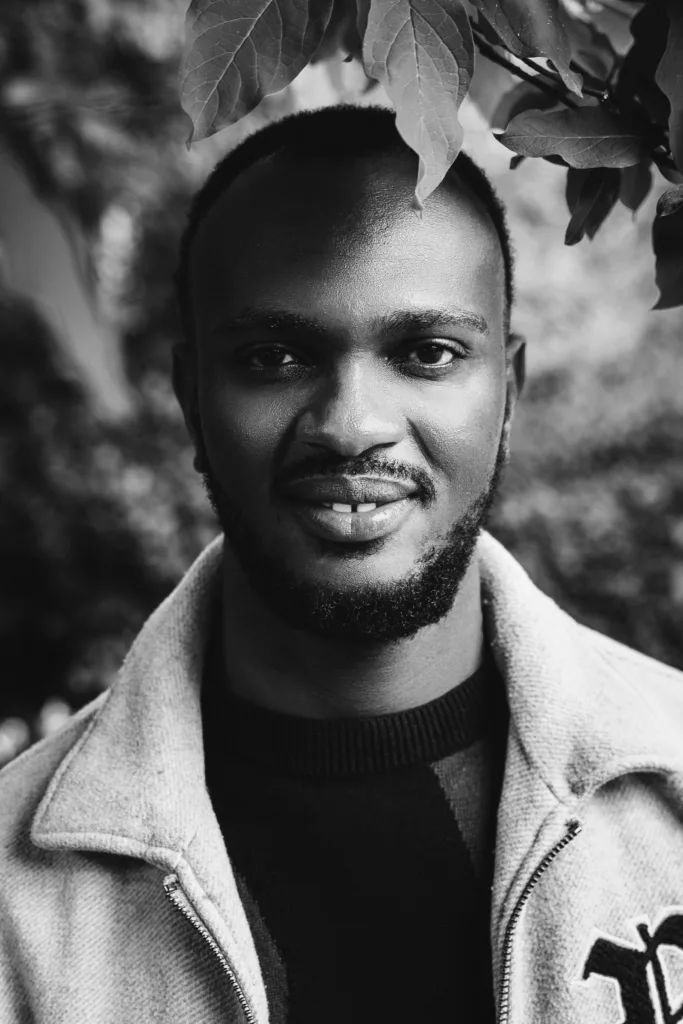
What happens when who you are, is illegal?
Me and Eric are meeting for the first time, but he doesn’t spend time on chit chat or small talk, he dives right into the deep stuff. When I proposed we meet at a coffee house, he suggested the Samtökin ‘78 offices instead, and when I see him enter the building, it is obvious that he feels at home here. Everyone in the office greets him with a smile and a hug, and he seems perfectly comfortable, content in his own being, friendly and popular.
Eric was born in 1994 in Edo State, Nigeria, the only son among three sisters. His parents wanted him to get an education and build a career before thinking about marriage, unlike his sisters who they expected to marry young and have children. Eric was sent to boarding school, as is common in the region. It was there that Eric fell in love for the first time, with a fellow pupil named Earnest. In Nigeria, homosexuality is a criminal offence. Under the Same Sex Marriage Prohibition Act of 2014, same-sex relationships carry sentences of up to fourteen years in prison in the south of the country and are punishable by death by stoning in the north. In 2019, a survey showed that 91% of Nigerians opposed same sex relationships.
Eric grew up knowing all this, but that didn’t change the feelings him and Earnest had for each other. On school breaks and after graduation, Ernest would visit Eric at his family home. They were careful not to be openly affectionate with one another, but one afternoon Eric’s mother saw them kiss goodbye. To Eric’s horror, she told his father, who reacted severely.
“I was beaten. I was hit. I’m the only son of my parents. My dad wanted to force me to get married. He said if he ever heard that again, of me doing something like this, he would kill me himself.” Without any options, Eric agreed to an arranged marriage. With his wife, he fathered a daughter, continuing to see Earnest in secret. Few options were on the table for a couple like Eric and Earnest, who had no way of pursuing their relationship openly. One afternoon, after Eric’s wife left the house to visit her parents, Ernest came over. When Eric’s wife unexpectedly returned home early, and saw her husband with another man, she was not just witnessing infidelity. In Nigeria, she was witnessing a crime. So, she called the police.
“It’s against the law,” Eric says, matter-of-factly. “Life sentence. Or death.”
On the run
Earnest ran home, and when Eric followed, his boyfriend had already been arrested. So, Eric ran. He passed through the bush, travelling at night and when he could go unseen. He had no belongings, no money, only the clothes on his back.
“I slept in the bush in the night. I was bruised, I have scars. I was so hurt. I met a neighbor from home, in Benin city, and he knew, he knew me from home. He gave me money to leave. He confirmed the police was looking for me. And that’s when I called my mom and she told me Earnest was dead. I just kept running. Running, running, running. I was keep running like, where can I make a home when even my home cannot accept me?”
So, Eric kept moving. From Nigeria he went to Agadez in Niger, he made his way to the Chad Republic then into Libya. He was imprisoned there, beaten and tortured, and spent time sleeping next to people who did not survive the night. From Libya he made it to Italy, where he found his way into an asylum camp. There he shared a room with eight men and was eventually thrown out after a fight with residents who had been harassing him. Eric spent the next weeks homeless, begging at a train station. Through a man he got to know at the station, he acquired a passport and followed the man onto a plane, being promised a better life at the other end of the trip.
He was arrested at Keflavík airport upon his arrival in 2018, handcuffed and held overnight. A lawyer was brought in the following morning, and he was eventually transferred to a refugee camp.
“When I came to Iceland, I didn’t know I was in Iceland,” Eric tells me and smiles, finding humor in his story despite its horrors. “When the police were asking me questions, I had to ask them where I was, and when they told me Iceland, I didn’t believe them.”
He did not disclose that he was gay during the asylum process, and when I ask him why, he tells me, animated: “In my life I don’t trust nobody, I didn’t say it to nobody. Why would I? Where I came from, the police were my enemies. They treated us badly. Why would I volunteer this information to the authorities?”
Excepting who you are
The years that followed were difficult in ways that are hard to comprehend if one hasn’t been an asylum seeker, if one hasn’t lived with the extreme insecurity of not knowing if you will be sent back to a place where you will be severely punished simply for being who you are. Eric could not bring himself to be honest about his sexuality to authorities, even after he was told that being an asylum seeker due to gay oppression in Nigeria would help his case. “My mental health was very bad. I could not function. I even got kicked out of camp, had to go to hospital.” At the time, he was in a relationship with a fellow asylum seeker, a trans woman, who was living as an out gay man at the time who told him: “if you don’t accept who you are, I will leave you.” Eric shakes his head when he tells me, explaining how he and his partner were together for two years here in Iceland, and during that time Eric was too afraid to try to get permanent residency since that meant coming out.
“I was keeping this since I was little,” Eric says, explaining why he couldn’t bring himself to come out. “From boarding school. My whole life.” It was the threat of losing another partner that finally made him say out loud what he had been carrying inside since childhood. As many of us know, coming out is not a one-time thing, you come out every day, and from there Eric’s journey moved in stages. He saw a counselor at Samtökin 78 regularly and became more confident in opening up to her as she earned his trust. He slowly got the courage to meet more people. He went to Pride for the first time, not believing this was his new reality. But with hope came fear, for Eric had an open asylum application and did not become a full Icelandic citizen until last February, seven years after his arrival to Iceland.
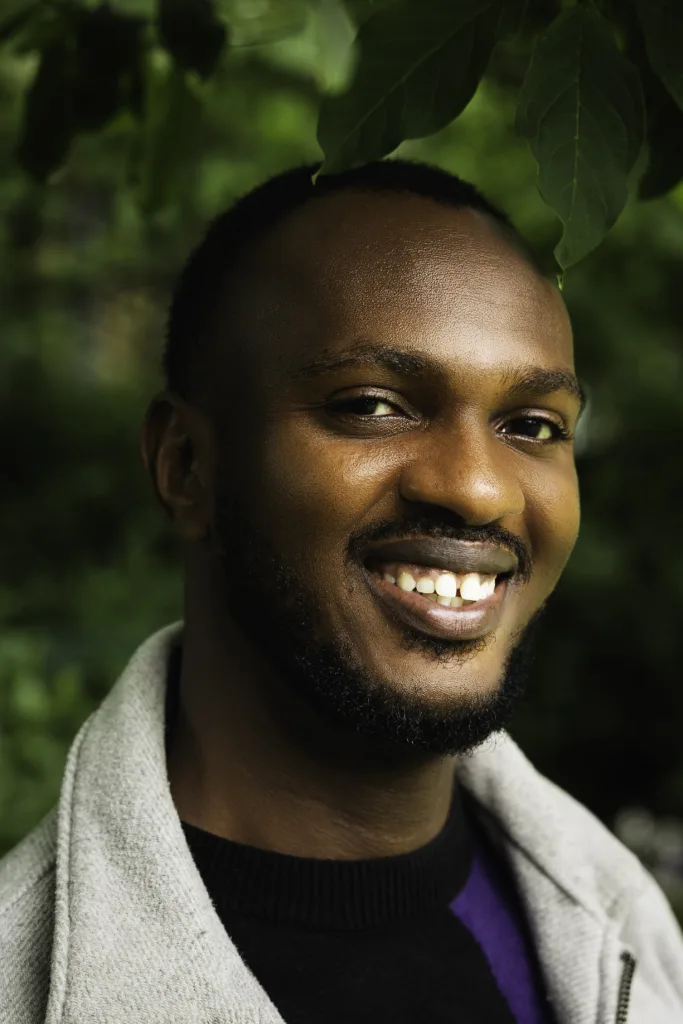
Patience for life
After Eric tells me all this, we part ways, hugging, and he exchanges pleasantries with his people at Samtökin 78. When Eric leaves and I remark how amazingly well adjusted he is despite his difficult life, I am told that maybe I should talk to someone who has known him for a while and learn about how much progress Eric has made since finding his community and becoming a citizen.
So, I do just that, and three days later me and Eric meet along with Sveinn Ísarr Kjartansson, who has become one of the central figures in Eric’s life in Iceland. Svenni heard about Eric through a friend at Samtökin 78, at a point when the people around Eric were worried about his isolation, his lack of friends and family and his fragile mental state having just come out for the first time, in a strange land where he was not yet a citizen and held no rights. Svenni suggests they take his dog, Ísar, for a walk.
“He was sort of guarded,” Svenni tells me, remembering their first meeting. “And I came with my little dog, and we just talked. On the way home we stopped at a petrol station for sandwiches. A group of loud young people came in and Eric tensed immediately. I’m not a professional or anything, I just came to be a friend. A grandfather-figure. But I realized a little bit more about his situation when I saw how afraid he was.” What Svenni saw that day, and kept seeing in the months that followed, was someone who, albeit still being guarded and fragile, still had an amazing resilience and had mastered the ability not to give up; to be patient in the way people are patient when they have no other option. Waiting for documents, for decisions, for rejections, for opportunities, a chance. And alongside all of that, Eric working on healing from years of rejecting himself because of what had been done to him in the name of who he was. “You have mastered, in a very difficult way, a patience for life,” Svenni says to Eric who listens, looking down as he is wont to do when the conversation turns to his darkest days. The days before he got permanent residency and his citizenship in Iceland.
Svenni describes preparing for the possibility that his citizenship application would be denied, and how he and a film maker friend interviewed Eric and planned to follow him as he got deported to force people in Iceland to see what was being done to this young man.
“But we didn’t have to. It was granted,” Sveinn says with emotion in his eyes, He places a hand on Eric’s shoulder, like the proud grandfather figure he is to Eric. “And the interview exists,” he continues, looking at Eric with pride. “It is not going anywhere, and it’s a part of the queer history of Iceland. You realize that you are part of Iceland’s queer history.”
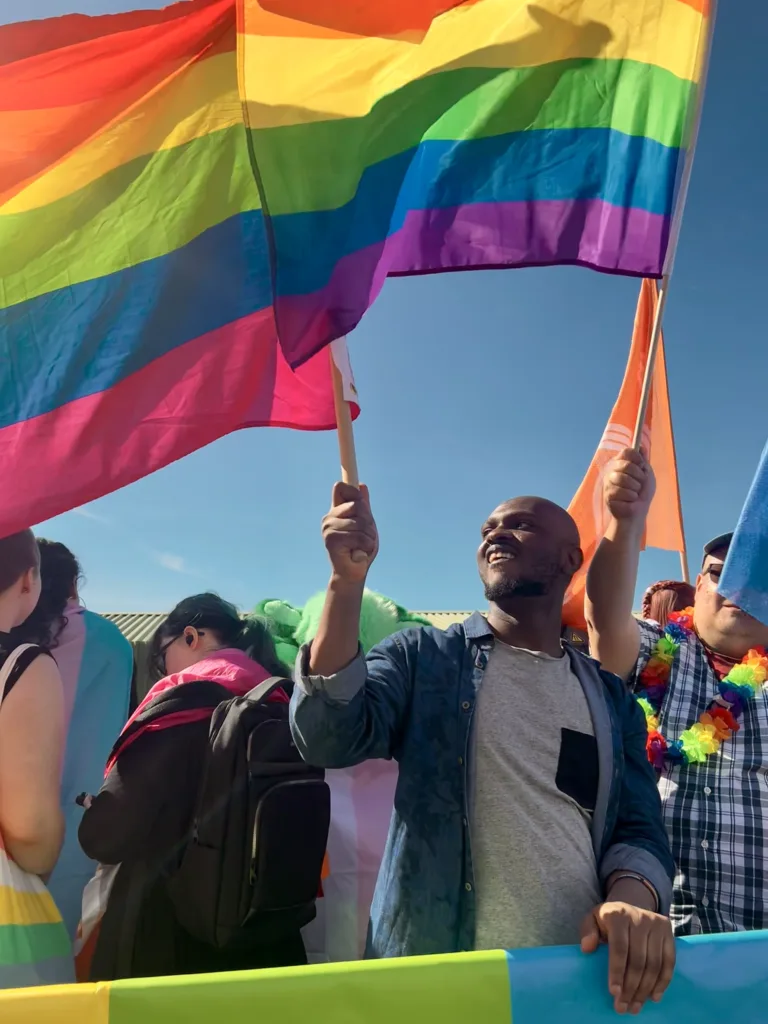
New family, new reality
Eric has not been in contact with anyone from his family in Nigeria since he ran away. Not his parents, not his sisters. No one. But according to him, his community in Iceland, Samtökin ‘78, gave him what his birth family could not. “They make me who I am today. I’m talking confidently today because of them. Because they are my family. You are my family. It’s not hard for me now to tell my story. I’m not scared anymore to say it. Before I was. But now, yeah. I can say my story to anyone. And I just want a simple life here. I just want to create, to be around creative people, to give back to his community, and be happy.” He nods as he says this, and I really hope he will be happy. That he is happy. So many people just like him never get to experience any happiness or even basic human rights, just because the laws and views where they are born have arbitrarily stripped away their humanity. Svenni, who is born in the sixties, reminisces about his formative years as a young gay man in Iceland, and notes how he remembers being ostracized and shamed for being who he is, right here in Iceland.
Our meeting is wrapping up, Eric and Svenni make plans to stop by Svenni’s restaurant and then take Ísar for a walk. The weather is calm and beautiful, and so is Eric, as he waves and exits the café, his face bathed in the fragile yet hopeful sunlight of early spring.